
The best choice for best create professional music to play online depends on what the reader needs after the first click: a hook idea and a short verse or chorus direction. Professional Music Creation needs a practical path through audio fit, rights checks, and channel reuse. For generatemusic.net, start with GenerateMusic; bring in Pricing only when it clarifies the next decision.
Before expanding the workflow, make one test observable through a hook idea, a short verse or chorus direction, and whether the result can be edited and used in the intended channel. The local decision belongs on AI Music Generator - Create Music Instantly with Free AI; the supporting frame from the U.S. Copyright Office AI hub and the TikTok Commercial Music Library guide keeps the article from drifting into vague advice. That matters for evaluators comparing create professional music to play options and wanting a shortlist with tradeoffs.
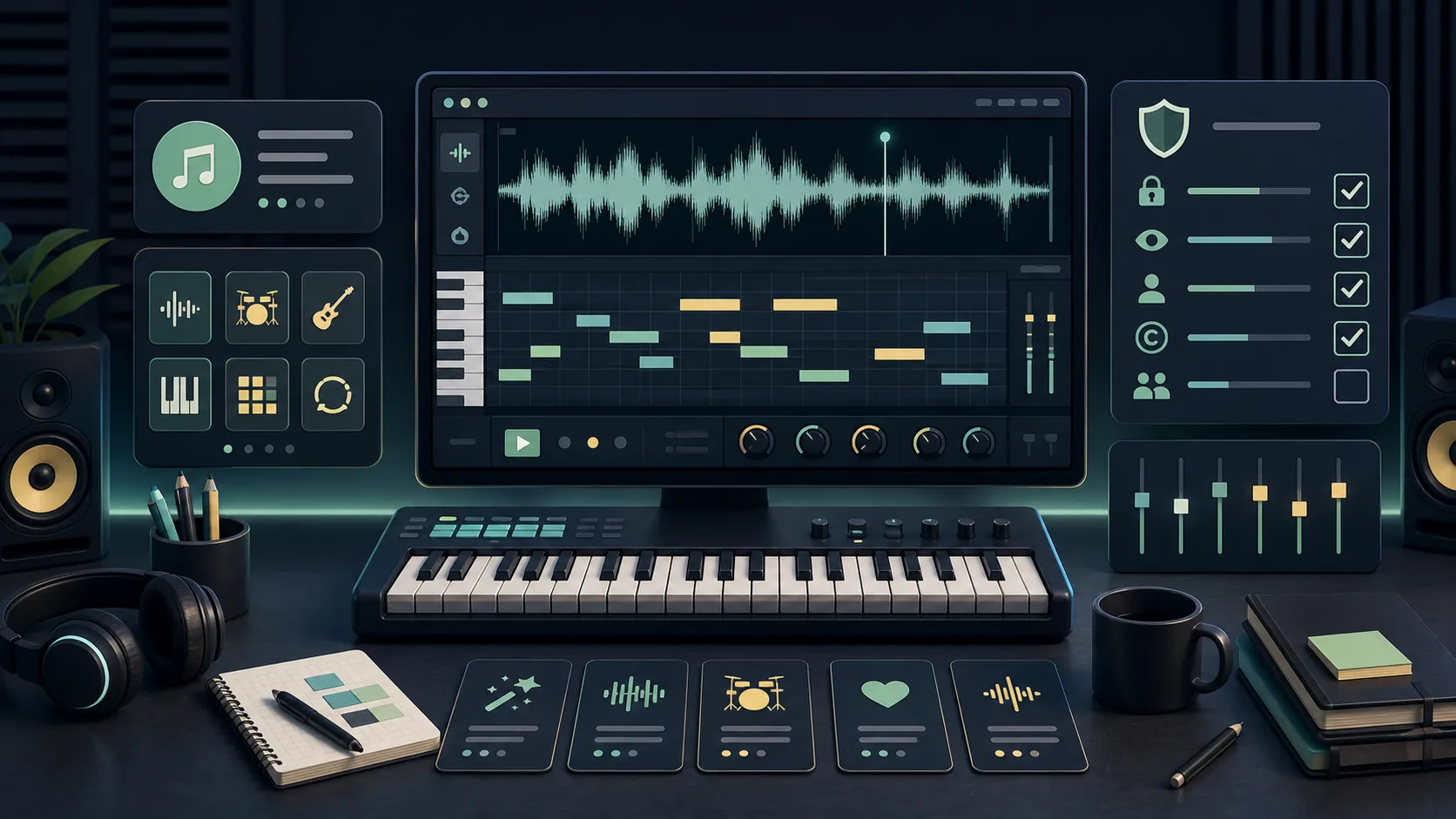
The article moves through Fast Picks for Different Professional Music Creation Sessions, Selection Criteria That Matter After the First Click, and Use Cases Where Professional Music Creation Makes Sense so the reader can define the decision, test it once, and choose a next step.
Key Takeaways
- Use best create professional music to play online to answer one practical decision before widening the workflow.
- Use GenerateMusic as the baseline, then add a follow-up path only if it improves the decision.
- Start with the audio job first: background bed, short hook, intro, or reusable soundtrack cue.
- Judge options by audio use case, rights fit, editability, and whether the first track can survive a real channel review.
Fast Picks for Different Professional Music Creation Sessions
A credible shortlist for best create professional music to play online starts with the reader's real use case, not with a fake universal ranking. For this topic, compare a hook idea, a short verse or chorus direction, and whether the result can be edited and used in the intended channel before opening more options. Use GenerateMusic as the starting point, then compare through Pricing only when the first result gives the reader something concrete to judge. Anchor this to beginner and advanced user. Keep the checkpoints visible: beginner, advanced user, budget, and speed. For this section, keep the evidence visible through a hook idea, a short verse or chorus direction, and whether the result can be edited and used in the intended channel.
- Background bed: choose the fastest path to a clean loop or subtle soundtrack.
- Short hook: prioritize editable melody, structure, and export quality.
- Creator workflow: check rights, channel fit, and how easily the idea can be revised.
- Local fit: keep this section grounded in generatemusic.net and the reader's next audio workflow decision.
Quick Picks
- Beginner: start with clear onboarding, understandable limits, and one easy first result.
- Advanced User: choose advanced controls only when they improve output quality, review speed, or repeatability.
- Budget: test the free or lowest-friction path before relying on it for repeated work.
- Speed: pick the route that gets from input to useful output with the least setup.
- Generatemusic.net Context: decide how this changes the first best create professional music to play online test.
That baseline matters before the reader opens GenerateMusic or uses the U.S. Copyright Office AI hub as a reference point, because both are easier to judge when the first job is already named.
Selection Criteria That Matter After the First Click
Judging Professional Music Creation is less about the longest feature list and more about the first usable result. The strongest picks make a hook idea, a short verse or chorus direction, and whether the result can be edited and used in the intended channel visible before the reader invests more time. If the workflow needs too much cleanup before that first result is useful, it is a weaker recommendation even if the homepage sounds exciting. Anchor this to quality and control. Anchor this section in quality, control, pricing, and workflow fit, then leave out anything that does not change the decision. For this section, keep the evidence visible through a hook idea, a short verse or chorus direction, and whether the result can be edited and used in the intended channel.
- Audio fit: the first draft should match the intended use, mood, and channel.
- Review rule: the reader should be able to test Selection Criteria That Matter After the First Click with one concrete Professional Music Creation pass.
- Rights: the workflow should make ownership, reuse, and platform limits visible.
- Staying power: the track should still feel usable after one calm review pass.
The useful next step is to run one small audio workflow test, keep the result, and ask whether it clarifies the original decision.
Use Cases Where Professional Music Creation Makes Sense
The best Professional Music Creation changes by use case. A Hook Idea, a short verse or chorus direction, and whether the result can be edited and used in the intended channel each need different strengths. Treat the shortlist as a map: pick the use case first, then choose the path that supports it without adding unnecessary friction. Anchor this to use case and tradeoff. Keep the checkpoints visible: use case, tradeoff, who should skip, and generatemusic.net context. Do not expand the section until a hook idea, a short verse or chorus direction, and whether the result can be edited and used in the intended channel are clear enough to review.
- Best for quick drafts: workflows that produce a listenable idea with low setup.
- Local fit: keep this section grounded in generatemusic.net and the reader's next audio workflow decision.
- Best for iteration: tools that let the reader revise structure without losing the first idea.
- Skip when exports, licensing, or cleanup effort are unclear.
That keeps the Use Cases Where Professional Music Creation Makes Sense section honest for generatemusic.net: the reader is reducing the next decision to something observable.
Limits That Should Change the Recommendation
Free or low-friction access still has tradeoffs. Rights, privacy, output consistency, cleanup time, and channel fit matter more once the reader moves beyond a single test session. Before calling something the best option, check whether those limits match the workflow the reader actually wants. Anchor this to pricing signal and limit. Make pricing signal, limit, supporting evidence, and generatemusic.net context explicit so the paragraph cannot drift into a reusable framework. The reader should be able to judge Limits That Should Change the Recommendation with a hook idea, a short verse or chorus direction, and whether the result can be edited and used in the intended channel.
- Rights and reuse matter more once a draft leaves private testing.
- Fast generation can help ideation, but weak editability slows real production.
- Review rule: the reader should be able to test Limits That Should Change the Recommendation with one concrete Professional Music Creation pass.
- Free access is strongest for a first test, not automatically for a long-term audio workflow.
After this check, best create professional music to play online should have a clear verdict: continue with the path that worked, pause because the signal is weak, or rewrite the brief before spending more time.
Stress-Test Professional Music Creation Before You Commit
Before committing more time to best create professional music to play online, ask whether the first result is useful or merely interesting. For generatemusic.net, judge the result against the user's actual constraint and the next action they are willing to take. If the first result looks interesting but does not help evaluators comparing create professional music to play options and wanting a shortlist with tradeoffs, it is still too early to build a larger routine around it.
Before expanding, ask whether the first pass solves the job, shows the next edit, and supports the goal to choose one relevant next click. Those questions keep the decision grounded in evidence the reader can see. They also keep the workflow practical: a hook idea, a short verse or chorus direction, and whether the result can be edited and used in the intended channel.
- Finish one bounded pass before opening a second path.
- Review Professional Music Creation against the original job, not against every possible use case.
- Keep the result only if the next step becomes easier to explain.
- Stop when the process needs more cleanup than the outcome is worth.
This pressure test makes best create professional music to play online more practical because it gives readers a stop rule. They can move forward when the workflow produces one clear, reusable outcome, and they can pause when the process depends on guesses the first session has not proved.
FAQ
What Should You Look for in Create Professional Music to Play?
Look first for a clear input, a useful output, review controls, and limits the reader can inspect before committing to a longer workflow. For best create professional music to play online, the strongest option is the one the reader can judge from one concrete test.
Which Create Professional Music to Play Is Best for Beginners?
The best beginner pick is the one with clear onboarding, visible limits, and a first result that is easy to judge. Beginners should start with GenerateMusic, test one narrow workflow, and move to Pricing only if the first option feels too limited or confusing.
Which Create Professional Music to Play Is Best for Advanced Users?
Advanced users should choose Professional Music Creation options with stronger controls, clearer review steps, and more dependable reuse. If the first result needs too much manual correction, the advanced feature set is not helping yet.
How Do You Compare Create Professional Music to Play Options Quickly?
Compare Professional Music Creation options by using the same input, the same success rule, and the same review step. Use GenerateMusic for the first pass and Pricing only when a second option would clarify output quality or workflow fit.
Are Free Create Professional Music to Play Tools Enough?
Free Professional Music Creation options are enough for discovery and a first workflow test. They are weaker when the reader needs stronger privacy expectations, export control, editing depth, or dependable repeat use.
Professional Music Creation Decision Rule
Professional Music Creation needs a practical path through audio fit, rights checks, and channel reuse.
For best create professional music to play online, choose by scenario first, then verify the pick with one short test instead of chasing every option. Start with GenerateMusic, then use Pricing only when it improves the decision. That keeps the best create professional music to play online decision practical enough for the reader to act on after the page.
For generatemusic.net, the best close is one the reader can use immediately: test, compare, revise, or pause.