
For readers evaluating ai music generator create use cases for small teams, the fit question is where it helps, what it costs, and which review signal matters before repeating the workflow. A useful ai music generator create use cases for small teams workflow turns an audio idea into something the reader can edit, review for rights, and match to the intended channel. For generatemusic.net, start with GenerateMusic; bring in Pricing only when it clarifies the next decision.
Use a compact first pass for ai music generator create use cases for small teams: a hook idea, a short verse or chorus direction, and whether the result can be edited and used in the intended channel. Use AI Music Generator - Create Music Instantly with Free AI for the local workflow, then read the U.S. Copyright Office AI hub and the TikTok Commercial Music Library guide as neutral references for structure and verification. That matters for readers deciding whether ai music generator create use cases for small teams fits a specific use case, workflow, or constraint.
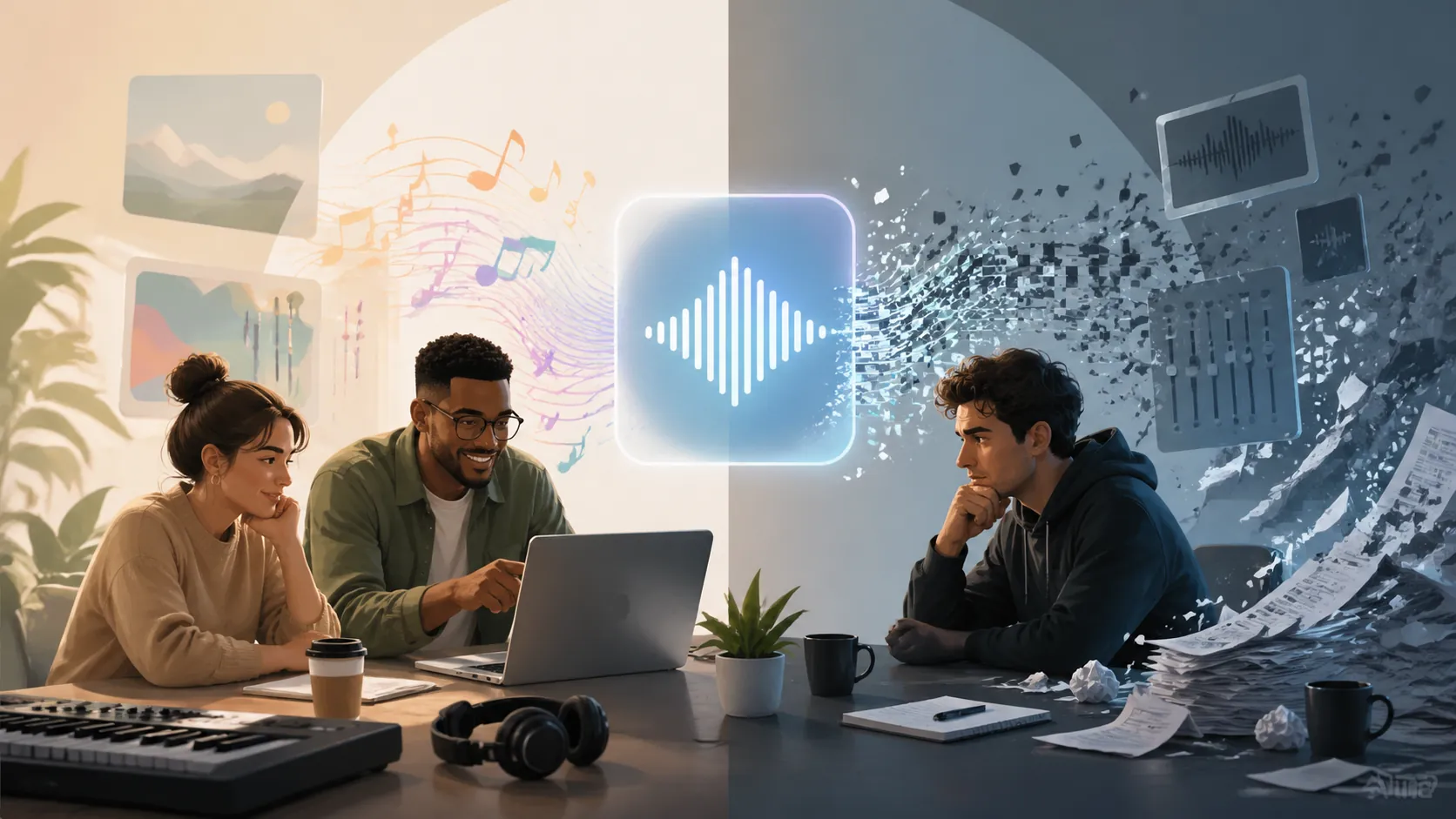
For generatemusic.net, the order is practical: understand the decision, run one bounded test, and leave with a clear follow-up path.
Key Takeaways
- Treat ai music generator create use cases for small teams as one bounded evaluation, with a clear reason to continue or stop.
- Let GenerateMusic handle the first pass before asking the reader to compare more options.
- Use The Real Decision Behind AI Music Generator Create Use Cases for Small Teams to define the job, owner, and success rule before opening more options.
- Use Where This Approach Creates the Most Value where one short session can prove value; pause when cleanup becomes the real work.
The Real Decision Behind AI Music Generator Create Use Cases for Small Teams
The first decision is not whether AI Music Generator Create Use Cases for Small Teams sounds interesting. It is whether one short session can help with a named job. For a small team, that job might be a hook idea or a short verse or chorus direction; the review rule is whether the result can be edited and used in the intended channel. Start with GenerateMusic only after that job is clear, because browsing without a success rule makes every option look equally plausible. Keep the checkpoints visible: reader problem, decision point, and constraint.
- Name the exact job behind The Real Decision Behind AI Music Generator Create Use Cases for Small Teams.
- Separate curiosity from the repeatable AI Music Generator Create Use Cases for Small Teams decision this section is meant to support.
- Use the first session for The Real Decision Behind AI Music Generator Create Use Cases for Small Teams to prove fit, not to explore every option.
Decision Criteria
- Reader Problem: name the exact job, the person doing it, and what would count as a useful first result.
- Decision Point: choose whether to test now, browse alternatives, or narrow the brief before moving.
- Constraint: keep the first ai music generator create use cases for small teams session small enough to finish, review, and repeat without guesswork.
That baseline matters before the reader opens GenerateMusic or uses the U.S. Copyright Office AI hub as a reference point, because both are easier to judge when the first job is already named.
Where This Approach Creates the Most Value
AI Music Generator Create Use Cases for Small Teams creates the most value when the first result can be judged quickly and reused without heavy cleanup. That usually means the workflow has a visible input, a visible output, and a limit the reader can accept. If Blog helps compare options, use it as a check; if it only adds more choices, stay with the smaller test. Keep the checkpoints visible: scenario, fit, and tradeoff.
- Use Where This Approach Creates the Most Value when the first AI Music Generator Create Use Cases for Small Teams result can be judged quickly.
- Use comparison only when it reduces uncertainty for ai music generator create use cases for small teams instead of adding work.
- Pause when the AI Music Generator Create Use Cases for Small Teams workflow needs heavy cleanup before it creates value.
The useful next step is to test the audio workflow idea in Pricing, keep the result, and ask whether it clarifies the original decision.
What to Try First and What to Ignore
The first pass should be deliberately plain. Pick one route, run one session, and judge one result before changing the genre, hook, voice, or channel. That discipline is what keeps ai music generator create use cases for small teams from turning into random exploration. Tie the advice back to first test, ignore list, and review rule; those details are what make this section belong to the topic.
- Try the lowest-friction path first.
- Ignore features that do not affect the first useful result.
- Keep the version that is easiest to repeat.
- Expand only after the first path is stable.
If What to Try First and What to Ignore leaves the reader with too many choices, return to the smallest audio workflow test and compare one alternative through Free Credits.
A Practical Decision Checklist
The final decision should be a verdict, not a mood. After one focused pass, the reader should know whether to continue, pause, or rewrite the brief. Use the checklist below before spending more time in Free Credits or comparing another path. Keep the checkpoints visible: go signal, pause signal, and next action.
- Go forward when the first test creates one usable outcome.
- Pause when the result depends on guesses the reader cannot verify.
- Change 1 input at a time so the next pass teaches something specific.
Checklist
- Go Signal: continue only when the first pass creates something usable without heavy cleanup.
- Pause Signal: stop when the result depends on assumptions the reader cannot verify.
- Next Action: open the relevant page, save the working version, or tighten the brief before retrying.
By the end of A Practical Decision Checklist, ai music generator create use cases for small teams should have a clear verdict: continue with the path that worked, pause because the signal is weak, or rewrite the brief before spending more time.
How to Pressure-test AI Music Generator Create Use Cases for Small Teams Before You Commit
Before committing more time to ai music generator create use cases for small teams, ask whether the first result is useful or merely interesting. For generatemusic.net, judge the result against the user's actual constraint and the next action they are willing to take. If the first result looks interesting but does not help readers deciding whether ai music generator create use cases for small teams fits a specific use case, workflow, or constraint, it is still too early to build a larger routine around it.
The review should answer three things: what worked, what needs one cleaner retry, and whether the result helps the reader choose one relevant next click. Those questions keep the decision grounded in evidence the reader can see. They also keep the workflow practical: a hook idea, a short verse or chorus direction, and whether the result can be edited and used in the intended channel.
- Finish one bounded pass before opening a second path.
- Review AI Music Generator Create Use Cases for Small Teams against the original job, not against every possible use case.
- Keep the result only if the next step becomes easier to explain.
- Stop when the process needs more cleanup than the outcome is worth.
The point is not to make AI Music Generator Create Use Cases for Small Teams sound bigger; it is to make the next decision easier to defend. They can move forward when the workflow produces one clear, reusable outcome, and they can pause when the process depends on guesses the first session has not proved.
FAQ
When Does AI Music Generator Create Use Cases for Small Teams Make Sense?
The right moment for AI Music Generator Create Use Cases for Small Teams is when the reader can judge one result against one success rule instead of hoping the workflow feels useful later.
What Problem Does AI Music Generator Create Use Cases for Small Teams Solve?
The problem ai music generator create use cases for small teams solves is the gap between a broad idea and a result the reader can judge. It helps readers create a testable first pass, then compare that pass against GenerateMusic, Pricing, or another relevant page before investing more time.
What Does a Practical AI Music Generator Create Use Cases for Small Teams Workflow Look Like?
Start with one named job, test it through GenerateMusic, and use Pricing only when the first review leaves a specific gap.
What Are the Main Limitations of AI Music Generator Create Use Cases for Small Teams?
The common failure points for AI Music Generator Create Use Cases for Small Teams are unclear inputs, loose success rules, and too much trust in the first decent result. For ai music generator create use cases for small teams, review the weakest step before scaling.
How Do You Know If AI Music Generator Create Use Cases for Small Teams Is the Right Fit?
AI Music Generator Create Use Cases for Small Teams is a good fit when the first pass teaches the reader what to keep, change, or stop. If it only creates more cleanup, the workflow is not ready yet.
Final Take and Next Step
A useful ai music generator create use cases for small teams workflow turns an audio idea into something the reader can edit, review for rights, and match to the intended channel.
For ai music generator create use cases for small teams, continue when the use case produces a result the reader can reuse, explain, or improve. Start with GenerateMusic, then use Pricing only when it improves the decision. That keeps the ai music generator create use cases for small teams decision practical enough for the reader to act on after the page.
For generatemusic.net, the best close is one the reader can use immediately: test, compare, revise, or pause.